Use-related risk analyses are central to medical device human factors work. They help identify critical tasks, guide safer product designs, and focus usability testing. Segurra helps you focus on and achieve these goals rather than lose time maintaining spreadsheets.
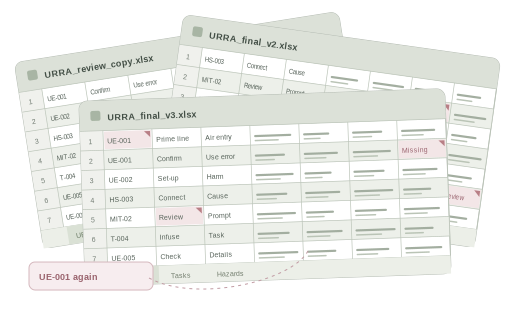
With spreadsheets
Same information re-entered in multiple places
Repeated harms, mitigations, and IDs mean more places to check when something changes.
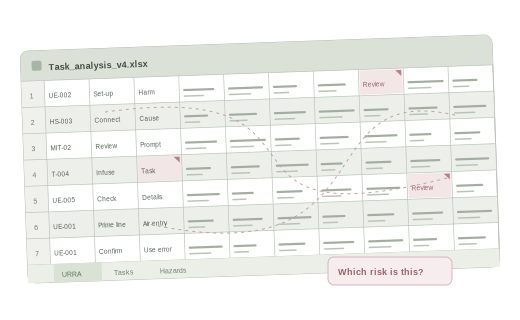
The big picture is hard to see
Long tables with many columns can cause key risks to be overlooked or remain underanalyzed.
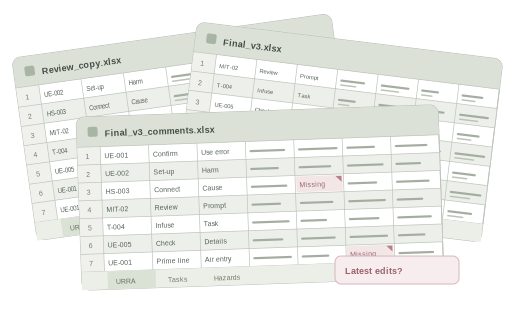
Feedback is difficult to gather and track
Sharing documents, collecting edits, and tracking changes is time consuming and difficult to manage.
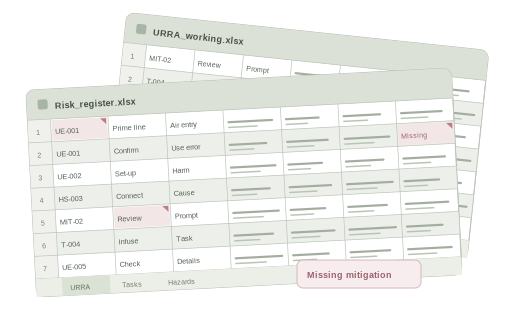
Open work is easy to overlook
Missing information and unresolved comments can be difficult to find.
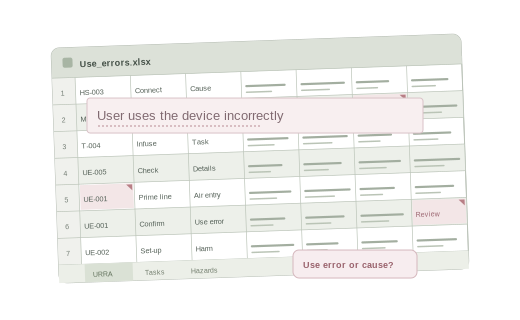
Quality and consistency are difficult to maintain
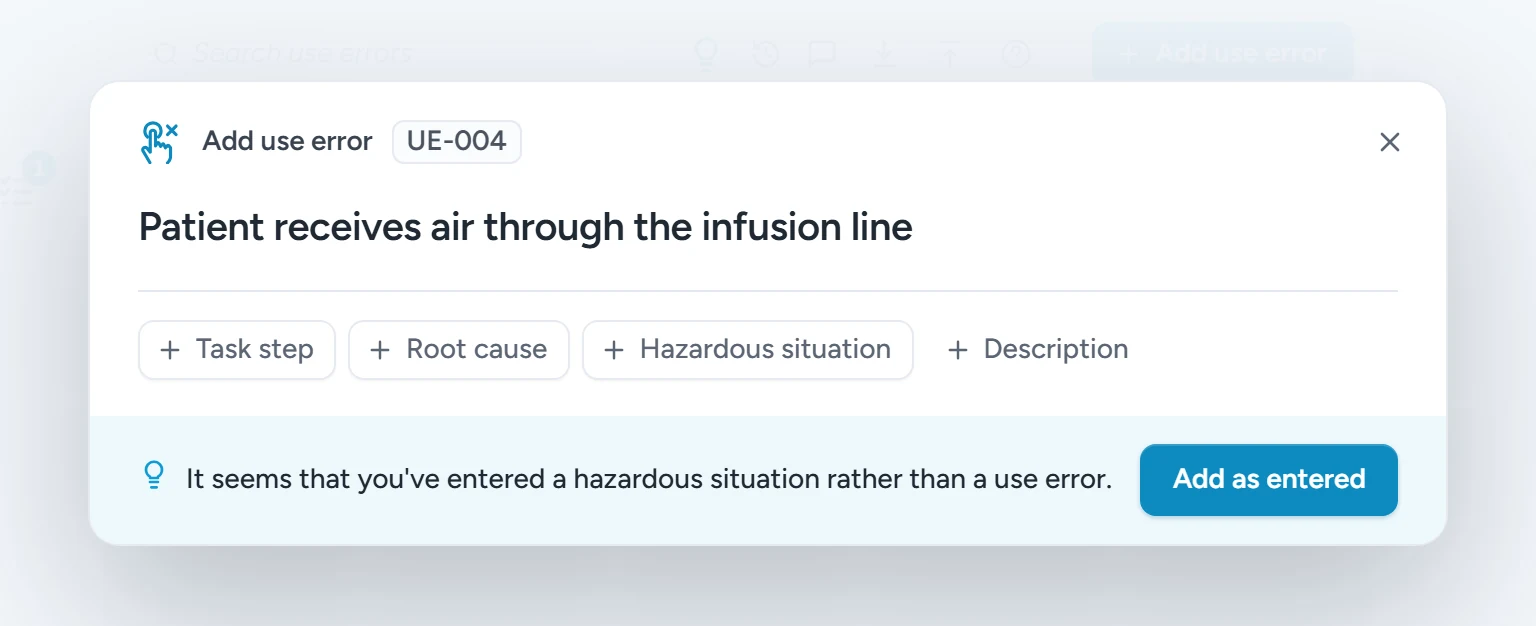
Use errors, root causes, and harms get mixed together or described inaccurately.
With
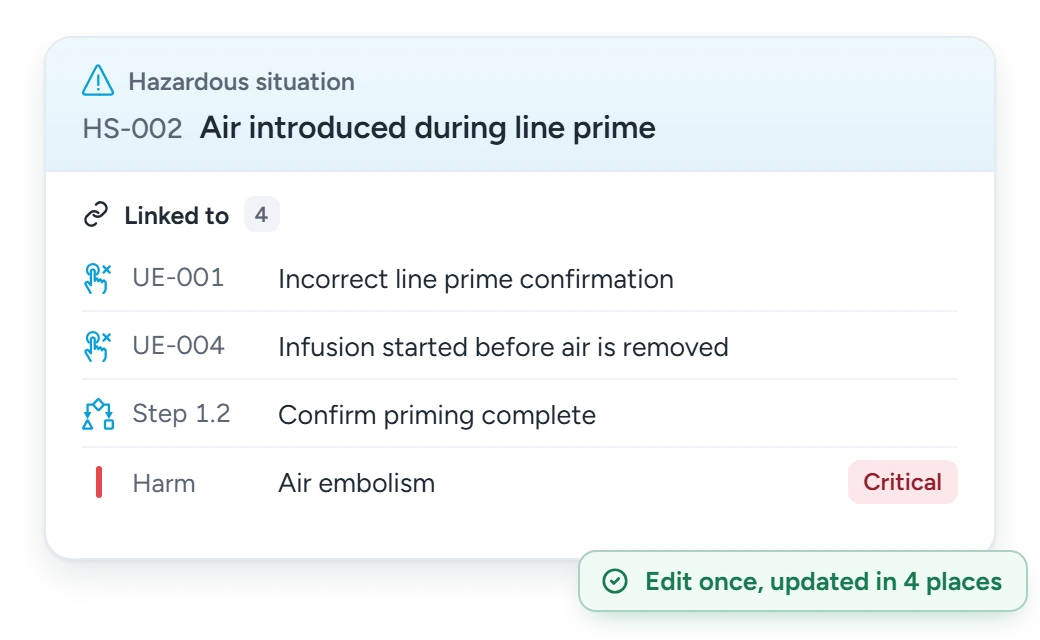
Shared information stays connected
Reuse linked records across the analysis and maintain details in one place.
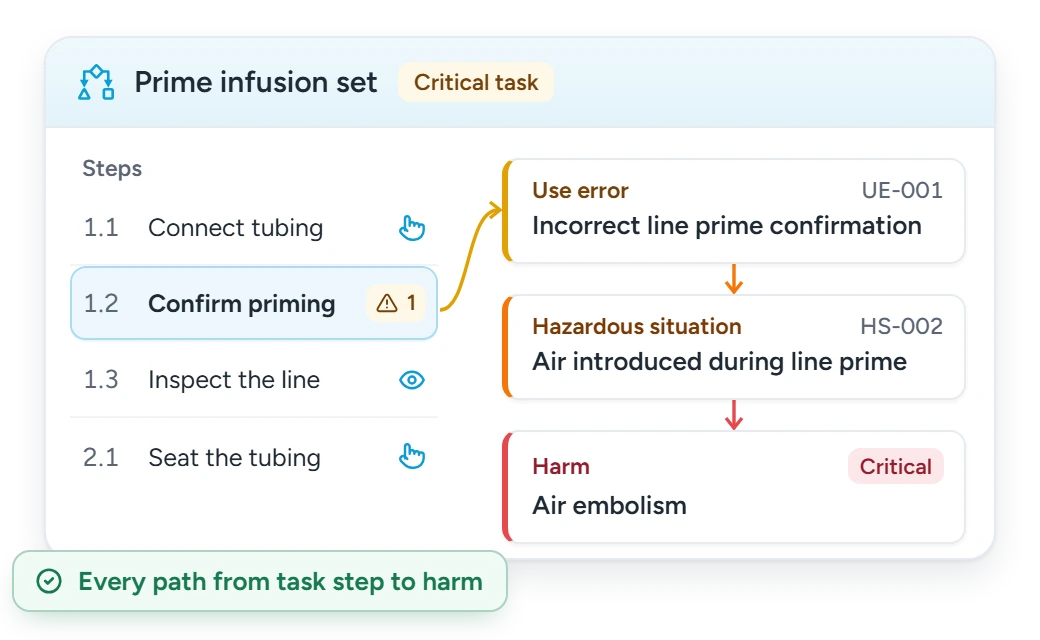
See the forest and the trees
Easily see what risks need attention and how they can occur.
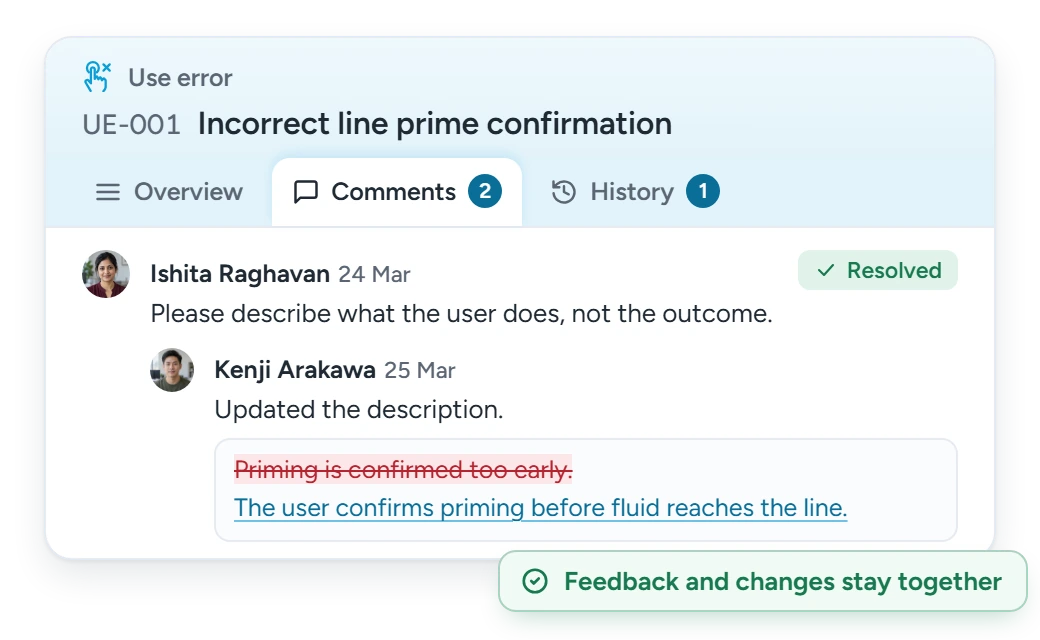
Collaboration is built-in
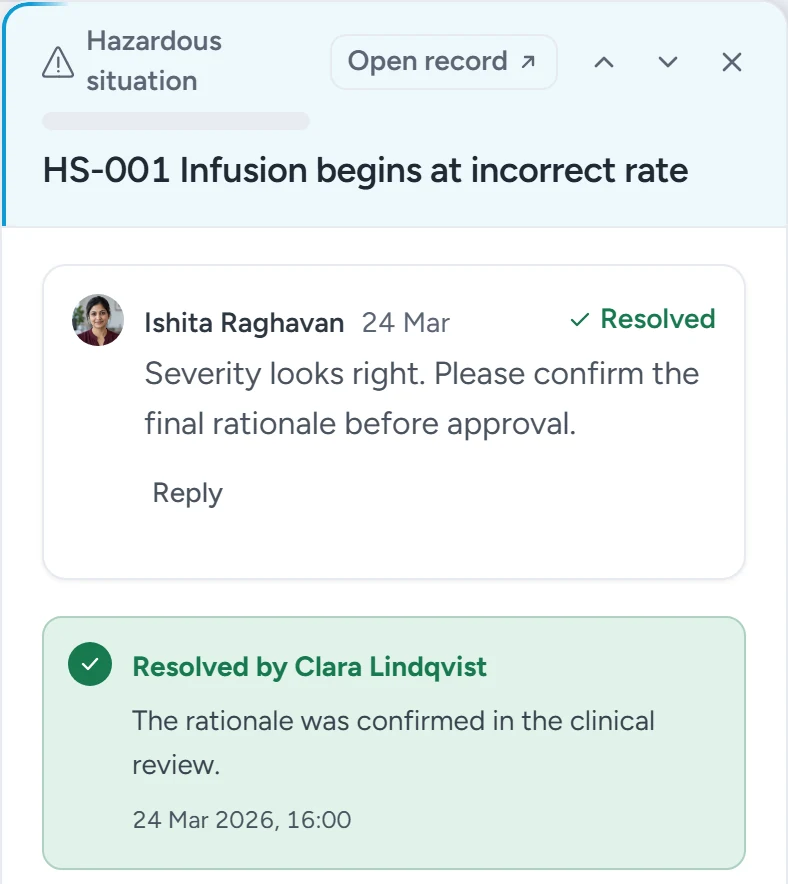
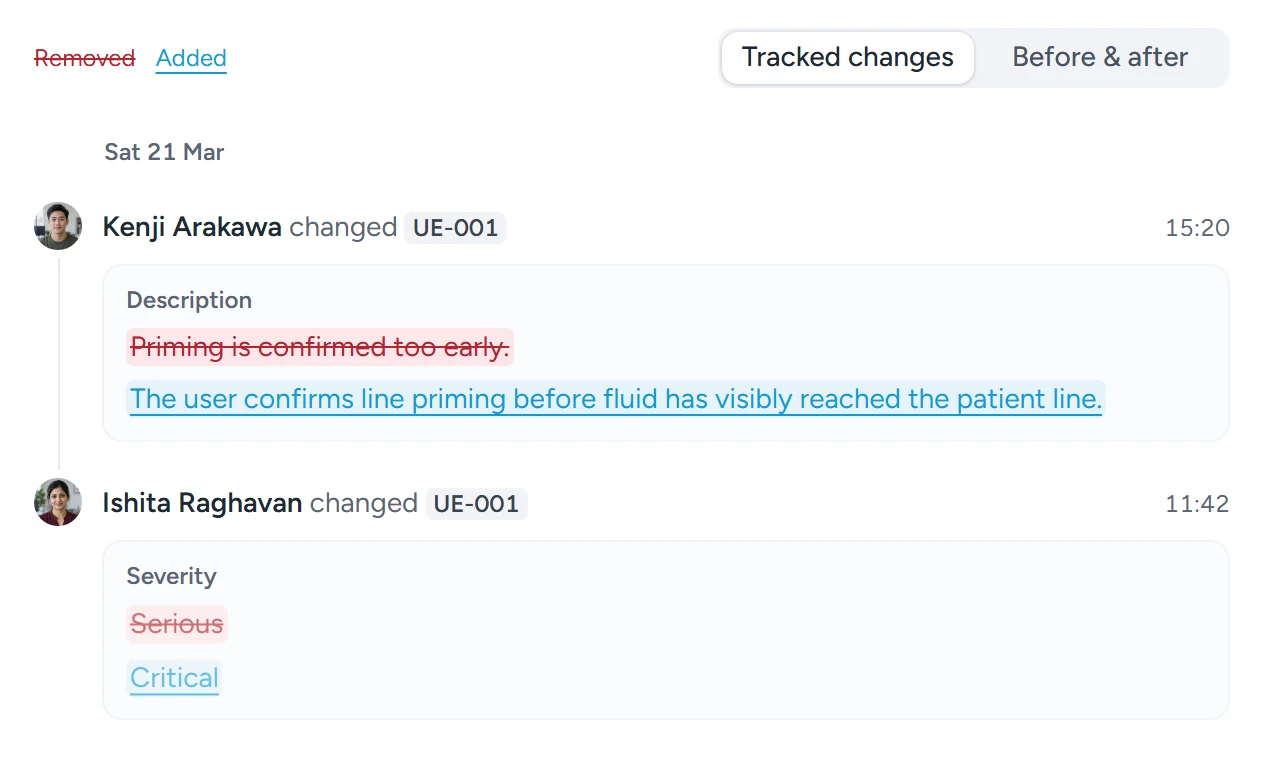
All team members can view current information, add comments, and see tracked changes.
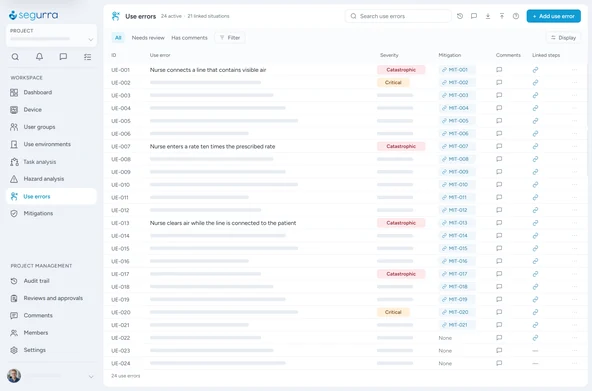
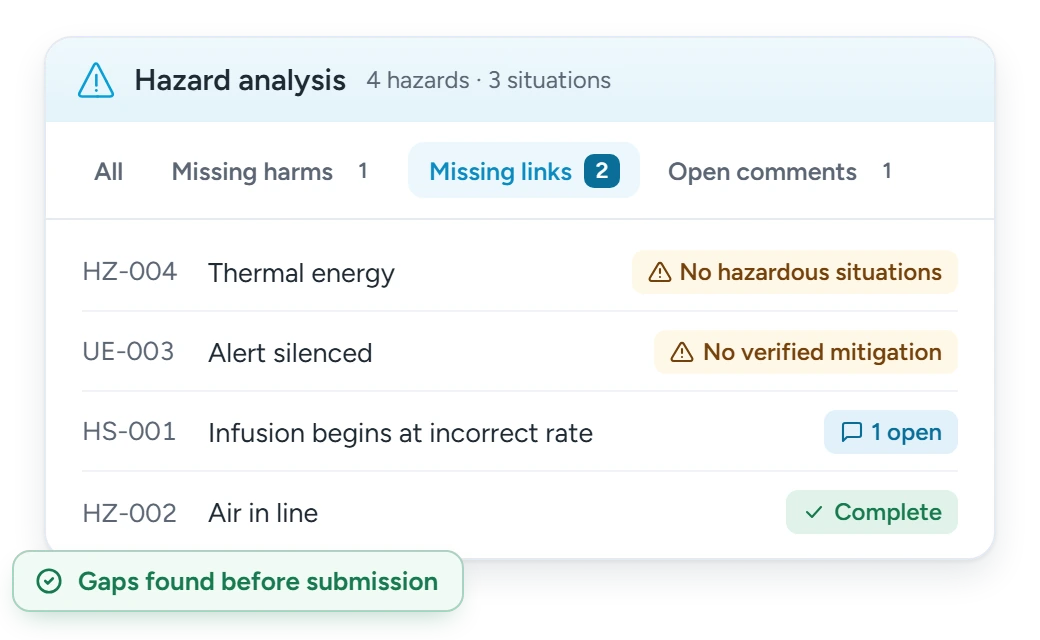
See what still needs attention
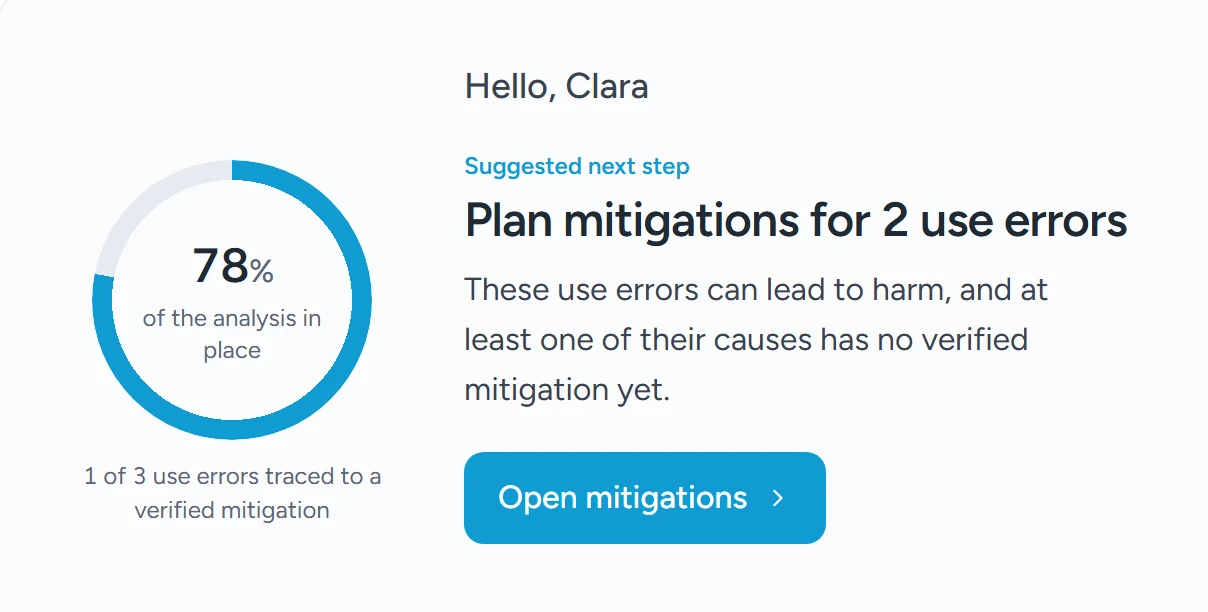
Segurra highlights missing information, traceability gaps, and unresolved comments.
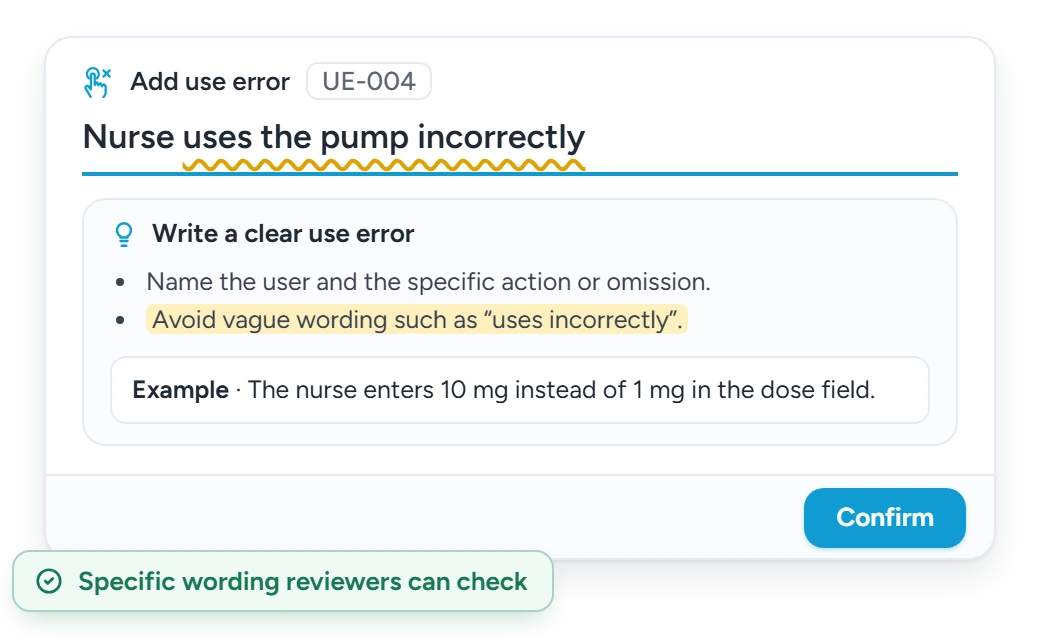
Get guidance while you write
Practical prompts and examples help your team describe the analysis clearly and consistently.
Comparison 1 of 5: Shared records
Shared recordsThe full pictureTeam reviewOpen workClear wording
All your use-related risk information in one place.
Keep user profiles, use environment descriptions, tasks, hazards, hazardous situations, use errors, causes, harms, and mitigations connected. Reuse the same records across the URRA, without maintaining separate copies.
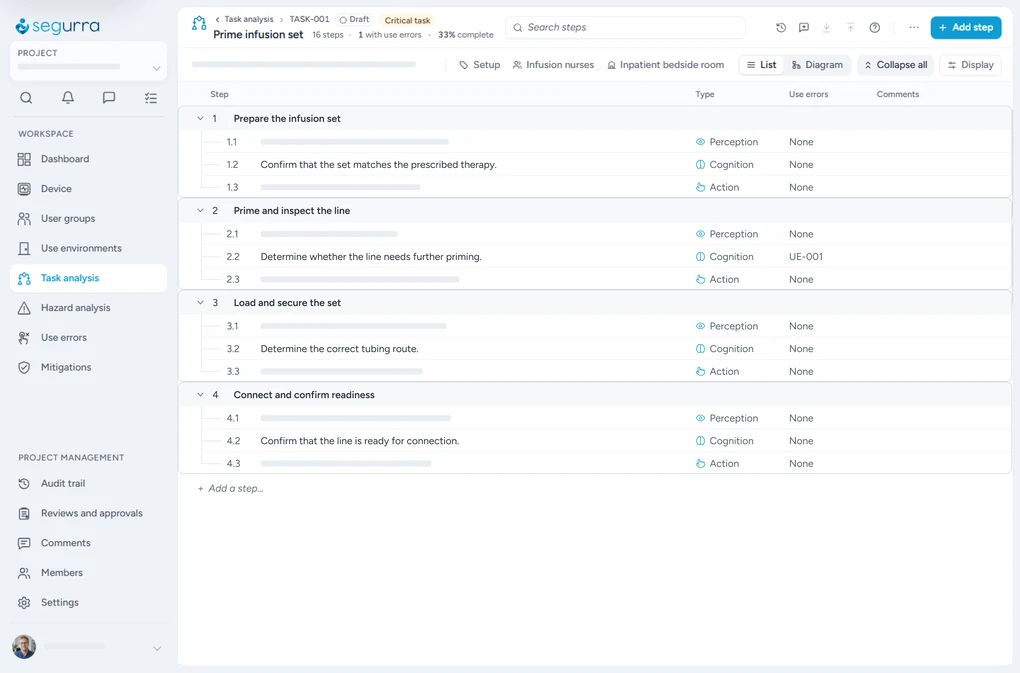
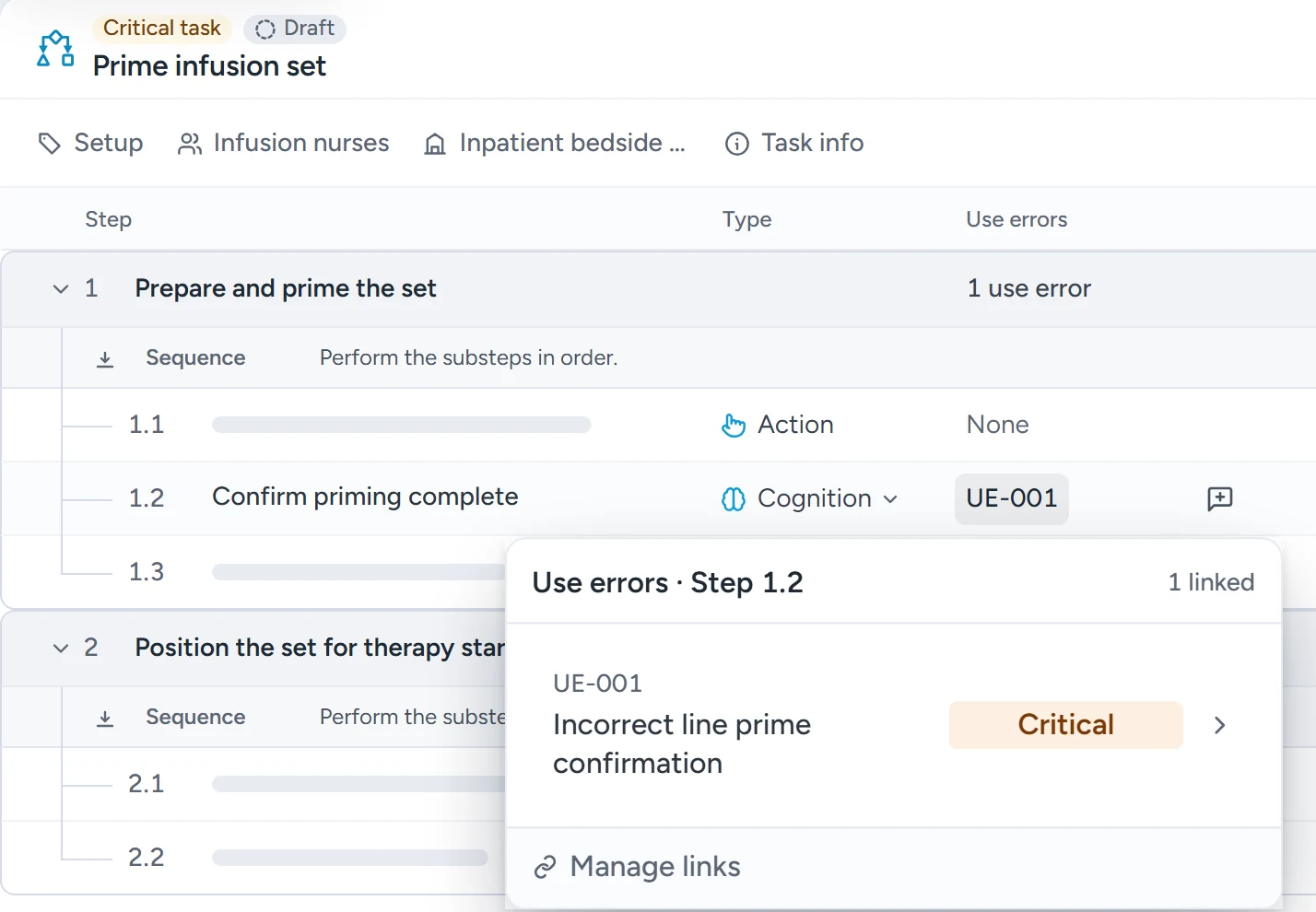
Know which tasks are critical and why.
Segurra automatically identifies critical tasks by reviewing the whole task flow and identifying related critical use errors.
You can easily find critical tasks, use errors, and associated mitigations to make sure your usability studies focus on them effectively.
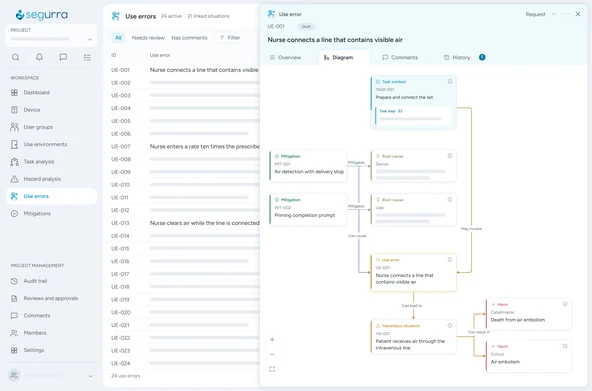
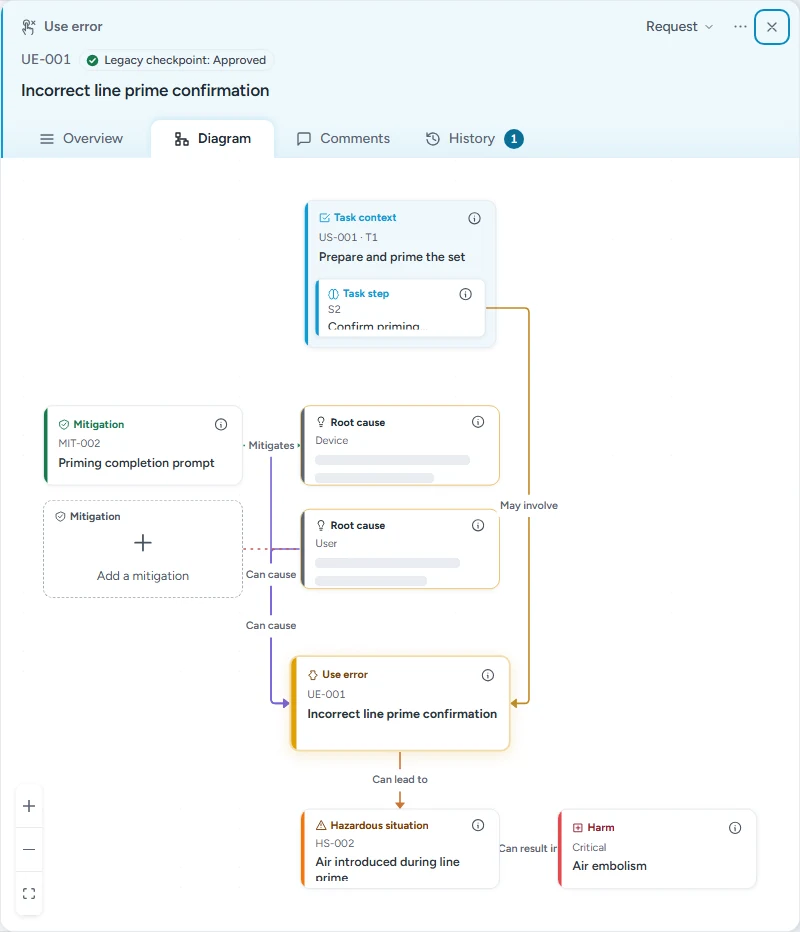
Easily see the whole risk chain.
Segurra’s diagrams make it easy to trace each use error back to its task steps and causes, and forward to the hazardous situation, harm, and mitigation.
Anyone reviewing the analysis can follow its reasoning without having to read through hundreds of spreadsheet rows.
Expert guidance as you write.
Segurra provides prompts and examples based on best practices developed by medical device human factors experts to help ensure your URRA content is clear. Clear wording means fewer questions back and conclusions that others can trust.
Jonathan KendlerMichael Wiklund
Made by leading human factors experts.
Segurra is being developed by Jonathan Kendler and Michael Wiklund, leading experts in medical device human factors who previously co-founded Wiklund Research & Design (now Emergo by UL).
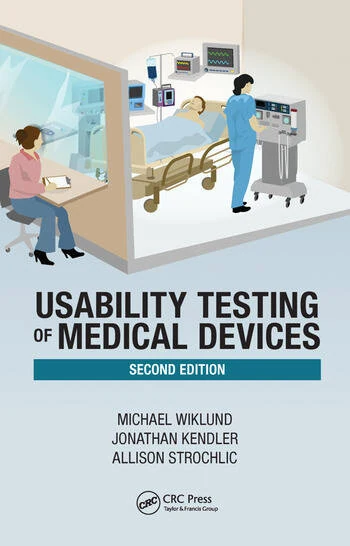
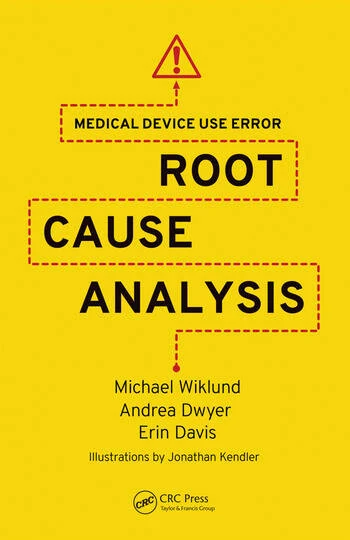
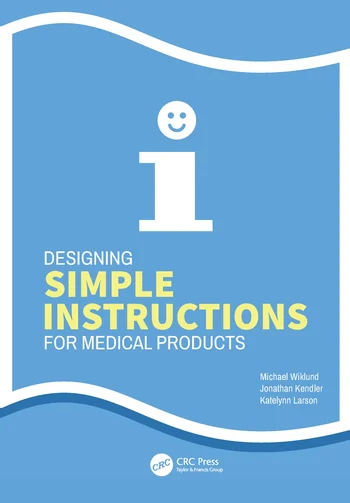
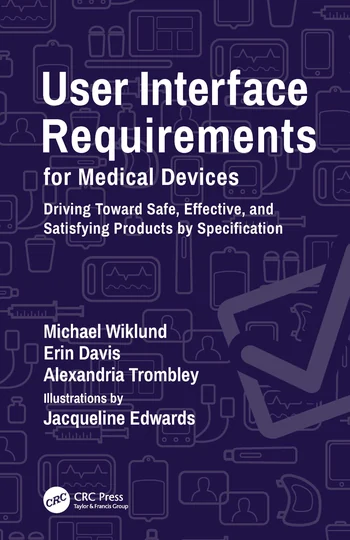
In addition to helping myriad medical device manufacturers apply human factors to their products, they have contributed to industry standards and guidelines and written several books on medical device usability, including:
They are building Segurra to solve the URRA challenges that many of their clients and colleagues face, and to improve their own URRA practices.
Work together.See changes. Find gaps.
Comments, change history, and coverage checks live within the analysis, so your team makes more progress with fewer review meetings.
Reviews are built into the URRA.
Colleagues comment on the exact task, use error, or mitigation in question. Each discussion stays with the relevant record, so feedback and decisions are easy to find.
Explain any decision months later.
Every change is recorded automatically, so traceability is built in. When someone asks in a design review or an audit why a risk looks the way it does, you can show how it got there.
See where more information or risk controls are needed.
Coverage checks flag use errors without risk controls, hazards without linked hazardous situations, and other incomplete links to help you complete your URRA before FDA and other regulatory submissions.
Help shape Segurra.
Several medical device teams are already using Segurra and we’re now inviting a small number of additional teams to use it on a real project, share feedback with us, and help decide what we build next.
Early access is a good fit if you:
Are starting or updating a URRA
Keep your current analysis in spreadsheets
Want to help shape a new tool, and are happy to share candid feedback
What does early access involve, and what does it cost?
We start with one URRA, help your team get set up in Segurra, and work through your feedback together. Early access teams talk with us directly, and what they tell us shapes how we improve Segurra. We agree the scope, timing, support, and price before you decide.
We already have a URRA in Excel. Do we have to start again?
No, you can import your existing analysis into Segurra. Segurra then checks the imported content and links with you and identifies any gaps. You review the result before relying on it.
Is it an eQMS or a general risk platform?
No, Segurra focuses on authoring and maintaining the use-related risk analysis. It works alongside your wider risk-management and quality processes and can share information with those platforms.
How does Segurra relate to IEC 62366-1, ISO 14971, and FDA human factors guidance?
Segurra helps you author and maintain the use-related risk analysis that IEC 62366-1 and FDA’s human factors guidance call for, and that feeds into your ISO 14971 risk management file. Your team stays responsible for the analysis, its conclusions, and approvals.
We already use risk management software. Can Segurra still help?
Certainly, Segurra can work alongside other risk management software tools. Segurra’s features focus on parts of the URRA process that are not addressed by other risk management software tools. Segurra can also import or export information from other risk management platforms so that all your information can stay in sync.
Does Segurra support Use-FMEAs?
Yes, Segurra’s workflow can support Use-FMEAs and Use Risk Analyses (URAs) as well. When setting up a new project, you can choose which information you wish to capture based on your preferences and when you export information you can choose the optimal format and content for your target audience.
Which products is Segurra designed for?
Medical devices, drug-device combination products, IVDs, and software as a medical device (SaMD).
Do we need to share confidential device information to get started?
No. We can start with a sample analysis. Before working with your company’s information, we agree what may be shared and who may access it.